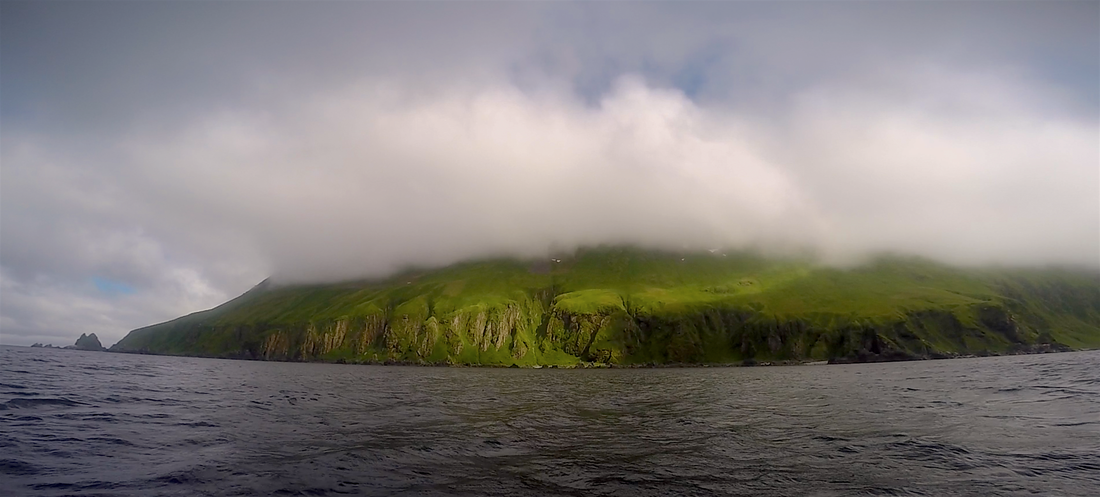
 Attu Island 7/12/2017 “This isn’t the end of the world, but you can see it from here” These words are posted on a sign at the US Coast Guard outpost on Attu. This lonely but spectacular island is the furthest west you can go in North America; technically we’re closer to Russia than anywhere else. Attu saw a severe battle between the US and entrenched Japanese soldiers during the second World War, but you’d never know it by the vistas afforded to us from our anchorage in Holtz Bay. Most of us, at least from San Diego, were eagerly awaiting our time at Attu. What would it be like all the way west? Would the wind be howling across the Near Strait? Would the water be unbearably cold? What would the rocky reef communities look like?
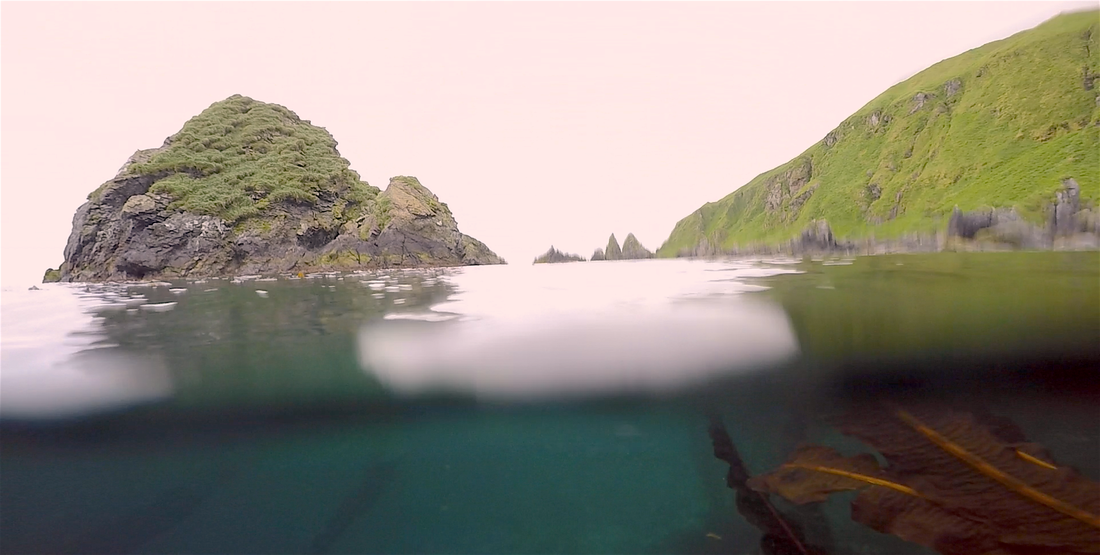
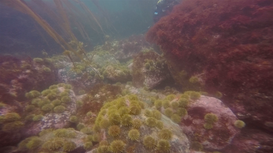
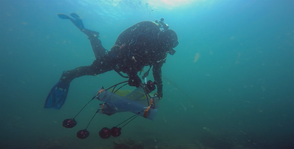 As part of his PhD, Scotty takes water samples from our kelp forest and urchin barren sites As part of his PhD, Scotty takes water samples from our kelp forest and urchin barren sites Attu, if nothing else, was spectacular beyond belief. Our dive sites were in the three different habitats that we are studying: a kelp forest, an urchin barren, and a transition zone. The conditions were exemplary and each midnight sunset was more spectacular than the last. The wind howling through hidden glacier-carved valleys subsided as we launched the small boats to our dive sites. The sun showed itself on multiple occasions, revealing towering snow-capped peaks looming above us. Tussock grass swayed gently in the breeze on the cliffs as murrelets and puffins darted between the water and the sky around us. Deployment of the benthic experiments went smoothly. We put three benthic chambers in each habitat to measure how much oxygen each habitat is producing. We may expect that kelp forests, because of the abundance of photosynthetic material (ie kelp) in the habitat, are more ‘productive’ ie produce more oxygen than urchin barrens, which are mostly devoid of kelp. Once they are placed on the bottom they sit for most of the time, although we maintain them every six hours, which affords us time to work on other projects. In the meantime, we enjoyed the sites Attu had to offer with breathless amazement. We were even allowed on shore for a brief expedition.
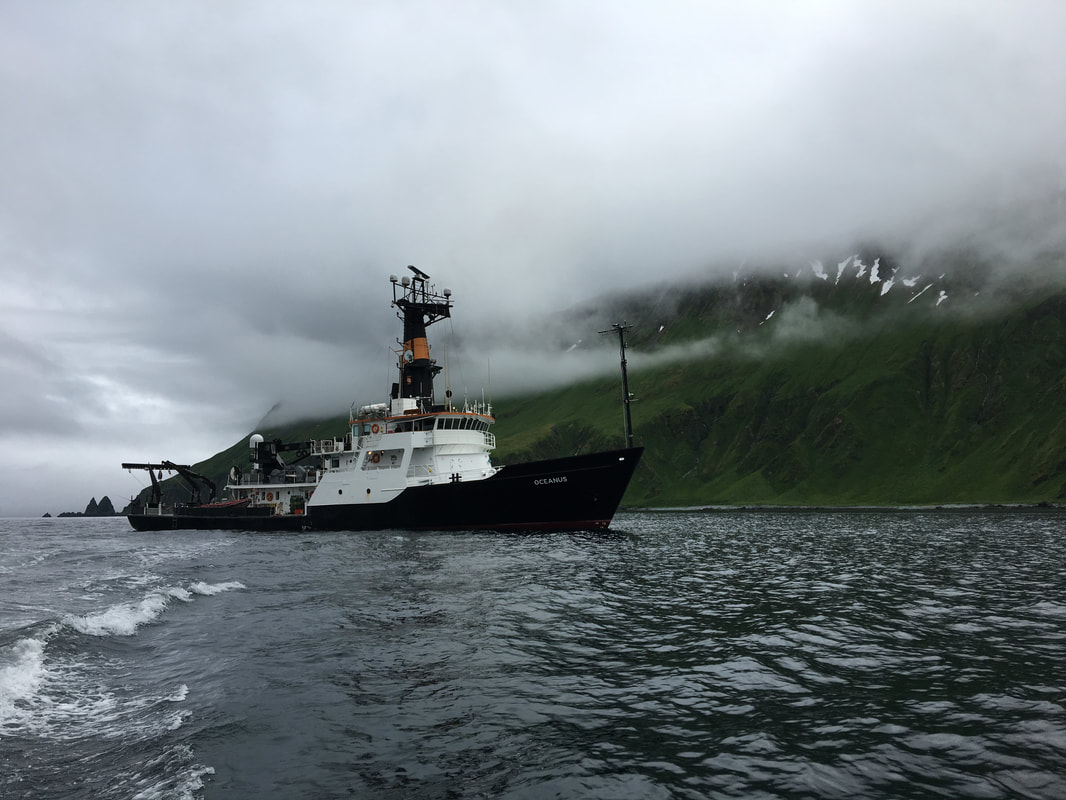
But, all too soon we had to pack up our experiments, stow the small boats on the Oceanus’s deck and begin our steam back east. For the rest of the trip we’ll be running to several more islands as we make our way eastward to Dutch Harbor on Unalaska, and our departure from the Aleutians. Until next time, -Pike (aka Baron von Urchin) 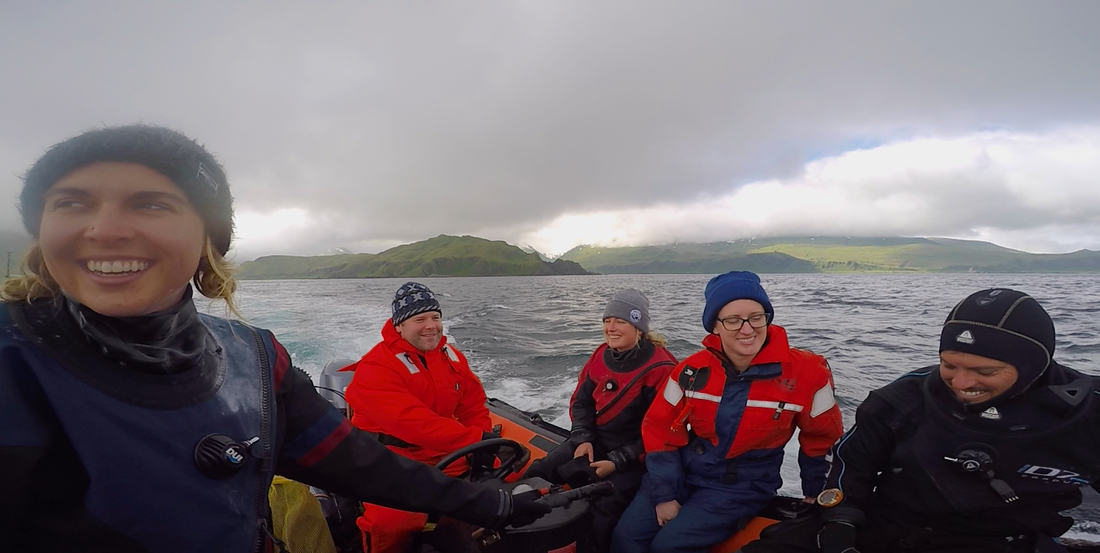 Once more into the breach; Edwards Lab members head into the field on a gorgeous Attu evening
0 Comments
Your comment will be posted after it is approved.
Leave a Reply. |
 RSS Feed
